
The Edge of the Map
We often treat the shoreline as a boundary, a definitive line where the human project ends and the wild begins. But look closer at the geography of leisure. These spaces are rarely as natural as they appear; they are curated zones of consumption, carefully manicured to provide a specific version of tranquility for those with the means to access them. We project our desires onto the horizon, seeking a stillness that is increasingly difficult to find in the dense, frantic grids of our daily lives. Yet, this stillness is a luxury, a temporary suspension of the social hierarchies that define our existence elsewhere. Who is permitted to stand at the edge of the water? Who is kept behind the gates of the resort, and who is tasked with maintaining the illusion of an untouched paradise? The view is never neutral; it is a product of capital, geography, and the invisible lines we draw between the tourist and the inhabitant.
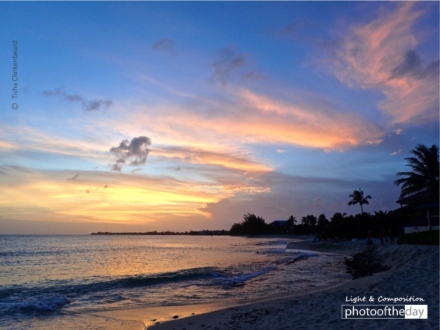
Tisha Clinkenbeard has captured this quiet tension in her image titled Cayman Sunset. It invites us to consider the cost of our own serenity in these curated landscapes. If the city is for everyone, what does it mean when we seek refuge in places designed only for some?