The Edge of the Commons
We often speak of the wilderness as a place devoid of human footprint, a pristine sanctuary untouched by the messy negotiations of urban life. Yet, even in the highest reaches of the mountains, we are projecting our desire for stillness onto the landscape. We seek these heights to escape the density of the city, to find a silence that our concrete environments refuse to provide. But who is truly permitted to inhabit this silence? The mountain is not merely a backdrop; it is a resource, a boundary, and a site of historical labor. When we retreat to the peaks, we are participating in a long tradition of claiming space for leisure, often ignoring the shepherds, the laborers, and the indigenous histories that shaped these slopes long before they became a destination for the weary city dweller. The landscape is never truly empty; it is a document of who has the mobility to leave and who is tethered to the ground below.
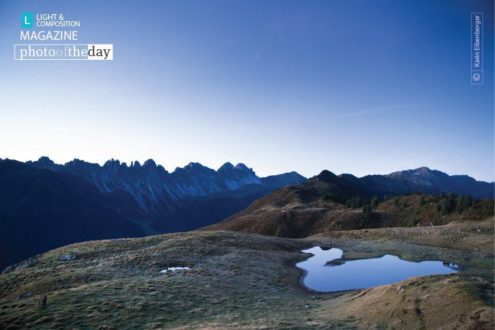
Karin Eibenberger has captured this tension in her beautiful image titled Salfeins Lake. She invites us to look at the mountains not just as scenery, but as a place where we choose to pause and reflect. Does the mountain belong to the one who climbs it, or to the one who lives in its shadow?