The Edge of Subsistence
We often mistake the periphery for a place of emptiness, a void where the city’s influence fades into the horizon. Yet, the margins are where the most vital, precarious labor occurs. When we look at the edges of our geography, we are really looking at the invisible infrastructure of survival. Who is permitted to occupy these spaces? Who is pushed to the very limit of the land to secure a living from the elements? There is a profound social stratification in how we relate to the water; for some, it is a site of leisure and aesthetic consumption, while for others, it is a relentless, unforgiving workplace. The geography of labor is rarely equitable. It reveals a stark divide between those who extract value from the environment and those who are entirely at its mercy. When we strip away the romanticism of the horizon, we are left with the raw reality of human endurance. If the city is a document of our collective priorities, what does it say about us when we relegate the most essential work to the furthest, most isolated reaches of our sight?
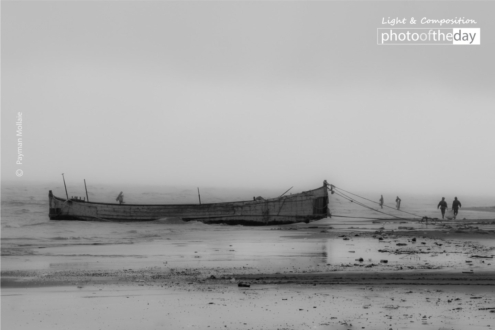
Payman Mollaie has captured this reality in the image titled Boat and Fisherman. It serves as a quiet reminder of the labor that sustains us far from the urban center. Does this view change how you perceive the spaces on the edge of your own world?