The Edge of Belonging
We often mistake the periphery for emptiness. In urban geography, the edges—the coastlines, the industrial fringes, the spaces where the concrete meets the tide—are frequently treated as voids, waiting to be developed or ignored. Yet, these are the sites of the most profound human labor. Here, the city’s formal grid dissolves, and we see the persistence of traditional ways of life that refuse to be erased by the relentless march of modernization. Who is allowed to occupy these margins? When we look at the person working at the threshold of the water, we are seeing a claim to space that exists outside of property titles and zoning laws. It is a quiet, rhythmic resistance against the homogenization of our landscapes. These figures remind us that the city is not just a collection of buildings, but a living, breathing document of survival and identity. If we push the margins further away, what happens to the people who define the character of our shores?
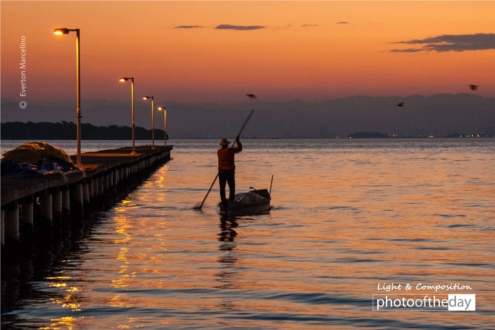
Everton Marcelino has captured this tension in his evocative image titled Dream Fisherman. It invites us to consider the quiet labor that sustains our coastal communities while the rest of the world looks elsewhere. Does this space feel like a sanctuary to you, or a place being left behind?