The Currency of Stolen Time
We often treat the city as a static backdrop, a container for our daily errands, forgetting that every corner is a repository of discarded histories. In the rush of the sidewalk, we pass objects that have outlived their original owners—relics of a time when punctuality was a mechanical ritual rather than a digital notification. These objects are the ghosts of the industrial age, remnants of a social contract that demanded we measure our lives in precise, ticking increments. When we see these items gathered in a public space, we are witnessing a transition: the private memory of a family heirloom being commodified into a public curiosity. It is a quiet form of displacement. Who decides which artifacts are worth preserving, and which are merely debris to be sold on a folding table? The city thrives on this constant churn of the old being repurposed by the new, but in that exchange, we lose the tether to the people who once held these things in their palms. If the city is a document, what does it say when we stop reading the history and start only counting the cost?
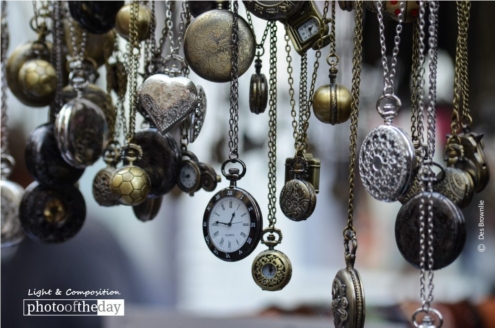
Des Brownlie has captured this tension in the image titled Pocket Watches. It serves as a reminder that even in the busiest markets, we are surrounded by the quiet weight of the past. Does the city belong to those who build it, or to the objects that outlast them?