The Architecture of Waiting
Transit hubs are the great equalizers of the modern city, yet they are rarely designed for the human experience of time. We build these spaces for throughput, for the rapid movement of bodies from one point of production to another. We treat the terminal as a machine, a place where efficiency is the only metric of success. But what happens when the machine stalls? When the rhythm of the schedule breaks, the terminal reveals its true nature as a site of profound social friction. In these moments of forced stillness, the architecture of the city suddenly feels alien. We see the people who are permitted to linger and those who are pushed to the margins. We see the difference between a space that facilitates human connection and one that merely processes human cargo. To wait in public is to exist in a state of vulnerability, exposed to the gaze of a system that values us only when we are in motion. Who is the city actually built for, if not for the person standing still?
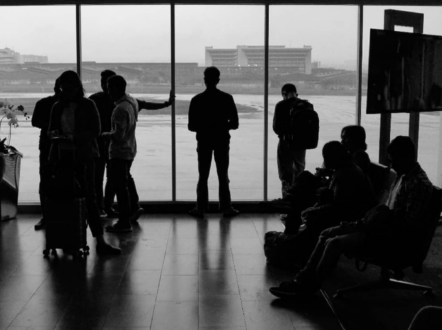
Ernest Kustiadihardjo has taken this beautiful image titled Delayed. It captures that exact tension between the frantic pace of the terminal and the quiet endurance of the individual. Does this space feel like a place of transition, or a place of exclusion to you?