The Architecture of Transit
In the nineteenth century, the invention of the tunnel was met with a peculiar kind of dread. People feared that the sudden transition from the open air into the belly of the earth would cause the lungs to collapse or the mind to fracture. We are creatures of the horizon, after all; we define our existence by the visible line where the sky meets the soil. To enter a tunnel is to voluntarily surrender that orientation, to trade the vastness of the world for a singular, repeating rhythm of stone and artificial light. It is a temporary suspension of geography. We become ghosts in a corridor, moving through a space designed only for passage, never for staying. There is a strange, quiet dignity in these places—the way they strip away the noise of the city until only the sound of one’s own heartbeat remains. If we are always in transit, always moving toward an exit we cannot yet see, does the journey itself become the only home we ever truly inhabit?
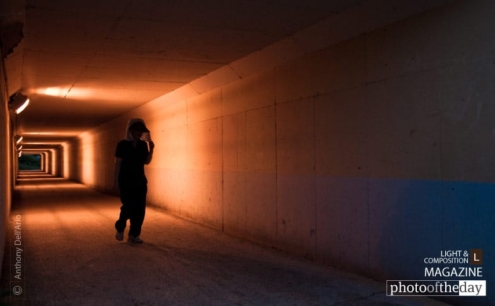
Anthony Dell’Ario has captured this feeling in his photograph titled Wormhole. He turns a simple passage in Seoul into a meditation on the space between here and there. Does the light at the end of the tunnel offer us a destination, or is it merely another beginning?