
The Architecture of the Spark
Cities are often defined by their permanence—the heavy stone, the rigid grid, the zoning laws that dictate where we sleep and where we toil. Yet, there is a secondary city that exists only in the margins of the night, a place where the social fabric is woven not from concrete, but from the fleeting energy of human presence. We tend to view urban spaces as static containers, forgetting that they are constantly being reclaimed by the people who inhabit them. When we introduce light into the dark corners of an alley or a forgotten square, we are not just illuminating a surface; we are asserting a claim. We are saying that this space, however neglected or overlooked, belongs to the imagination of those who dare to occupy it. It is a reminder that the city is not merely a collection of buildings, but a living, breathing performance. Who is granted the right to light up the dark, and who is left to fade into the shadows of the infrastructure?
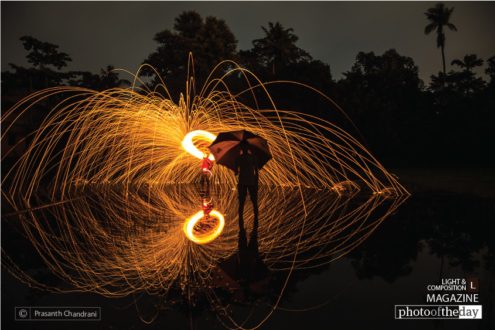
Prasanth Chandran has taken this beautiful image titled Fire Forecast. It captures a moment where the industrial darkness of the city is momentarily transformed by a human-made glow. Does this light invite us to reclaim the public realm, or does it merely highlight the emptiness of the space it occupies?