
The Architecture of the Pause
There is a specific, quiet alchemy in the transition between the frantic pace of the day and the velvet arrival of night. We spend so much of our lives in motion, propelled by the momentum of tasks and the ticking of clocks, that we often fail to notice the exact moment the world decides to exhale. It is a brief, suspended interval—that blue-grey threshold where the sharp edges of the afternoon soften into something more fluid and forgiving. Ancient astronomers once looked to this twilight hour to calibrate their instruments, seeking the clarity that only arrives when the sun has retreated but the dark has not yet fully claimed the horizon. It is a time for recalibration. We are not quite who we were at noon, nor are we yet the people who will dream in the deep hours of the night. In this middle space, the noise of the world recedes, leaving only the rhythm of our own breathing. What remains when the urgency of the day finally falls away?
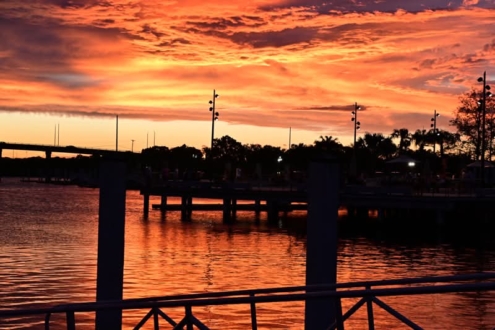
José J. Rivera-Negrón has captured this exact stillness in the image titled Tampa Twilight. It serves as a gentle reminder that sometimes the most profound movement is the act of standing still. Does the evening feel different to you when you stop to listen to it?