The Architecture of the Pause
In the study of ancient clocks, there is a mechanism known as the escapement. It is the part that does not merely let time flow, but rather, it interrupts it. It catches the gear, holds it for a fraction of a heartbeat, and then releases it. Without this constant, rhythmic stutter, the machine would simply spin itself into a blur of wasted energy. We often view our own lives as a continuous, forward-leaning motion, a desperate race to reach the next horizon. We fear the stillness, equating it with stagnation or failure. Yet, it is in the interruption—the sudden, deliberate check on our own momentum—that we find the space to reclaim our agency. To stop is not to retreat; it is to acknowledge that we are the authors of our own trajectory, capable of choosing a different direction even when the current is strongest. What would happen if we treated our impulses with the same mechanical grace, allowing ourselves the dignity of a hesitation before the next step?
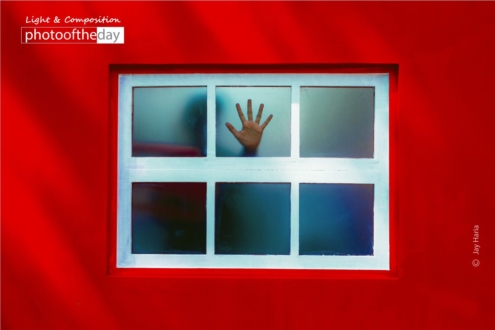
Jay Haria has captured this exact weight of hesitation in his image titled The Stopping Hand. It is a quiet, powerful reminder that we always have the power to interrupt our own momentum. Does this image make you think of a moment where you chose to stop?