The Architecture of the Path
There is a quiet, persistent myth that a road exists to take us somewhere. We treat the asphalt and the gravel as mere conduits, necessary evils to be endured between the comfort of where we were and the promise of where we are going. Yet, if you look at a map of a mountain pass, you see something entirely different: a signature. It is a conversation between the stubbornness of stone and the fragility of human intent. The earth does not want to be crossed, and so the road must negotiate, curving and bowing, finding the path of least resistance through the indifference of the landscape. We are so preoccupied with the destination that we rarely notice the geometry of our own persistence. We are simply lines drawn across a vast, unyielding surface, temporary marks on a map that was written long before we arrived. If the road could speak, would it tell us of the places it has seen, or would it simply remind us that we are only ever passing through?
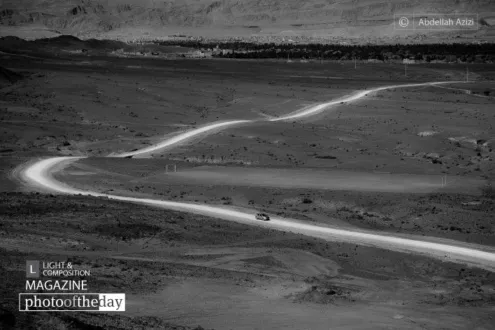
Abdellah Azizi has captured this sense of scale in his work titled Bright Road. It serves as a gentle reminder that our journeys are often defined as much by the terrain we traverse as by the places we seek to reach. Does the road lead you, or do you lead the road?