The Architecture of the Edge
We often mistake the periphery for emptiness. In our rush to define the city by its density and its concrete, we forget that the most vital borders are those where the built environment yields to the wild. These edges are not merely gaps in the map; they are contested territories where the non-human world attempts to negotiate a place within our rigid grids. We design our spaces for efficiency, for transit, and for commerce, yet we rarely account for the silent observers that watch us from the margins. They exist in the cracks of our planning, inhabiting the poles and wires we erect to bind our civilization together. There is a profound tension in this proximity—a reminder that while we claim to own the land, we are merely tenants sharing the skyline with those who do not require our permission to exist. We build walls to keep the world out, but the world is always watching from the fence line. Who truly owns the space between the pavement and the sky?
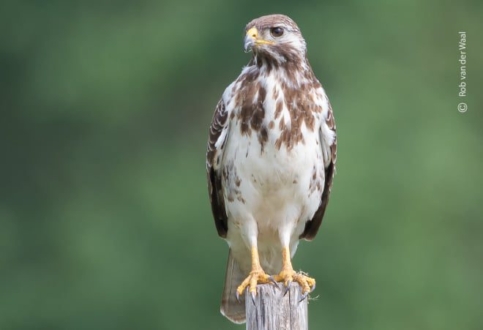
Rob van der Waal has captured this quiet tension in his image titled Geduldig. It serves as a stark reminder of the wild lives that persist on the outskirts of our human-centric designs. Does this gaze make you feel like an intruder in your own landscape?