The Architecture of Solitude
We often mistake isolation for emptiness, assuming that a space devoid of people is a space without a story. Yet, the structures we leave behind in the landscape are the most honest documents of our relationship with the environment. When we build in the margins—far from the dense, frantic grids of the city—we are not just erecting shelter; we are carving out a private geography of retreat. These timber frames, weathered by the elements, speak to a human desire to negotiate with the wild, to find a threshold where the domestic meets the untamed. Who is this space for? Is it a sanctuary for the weary, or a monument to the luxury of being unreachable? The city demands our constant presence, our visibility, and our participation in the collective hum. In contrast, these remote outposts remind us that there is a profound social value in the act of disappearing, even if only for a moment. What does it mean to build a home in a place where no one is watching?
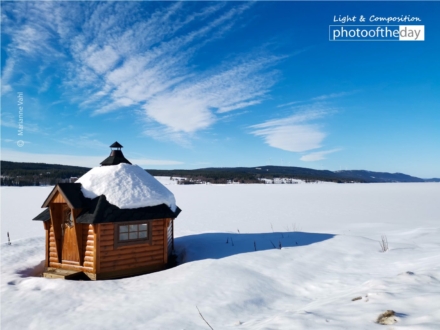
Marianne Vahl has captured this quiet tension in her image titled Snow Bathing. It invites us to consider the boundary between the structures we inhabit and the vast, indifferent landscape that surrounds them. Does this space feel like a refuge to you, or an intrusion?