
The Architecture of Solitude
In the seventeenth century, the Dutch masters understood that darkness was not merely the absence of the sun, but a canvas in its own right. They painted interiors where the shadows held as much weight as the furniture, suggesting that what we cannot see is often more significant than what is laid bare. We spend our lives trying to illuminate every corner, fearing the quiet gaps where nothing is happening. Yet, it is precisely in those unobserved pockets of time—the hours when the rest of the world has retreated into sleep—that the true character of a person emerges. When the noise of the day dissolves, the individual is left with only the task at hand and the weight of their own thoughts. It is a lonely, necessary labor. We are all, in some sense, working by a singular, flickering flame, trying to make sense of the vast, encroaching night. Does the work define the person, or does the darkness surrounding the work give it its final, necessary shape?
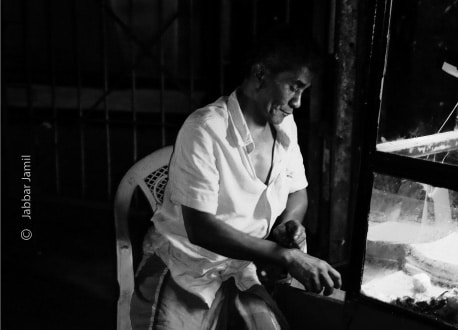
Jabbar Jamil has captured this quiet persistence in his image titled Working at Night. It is a gentle reminder of the dignity found in the solitary hours. How do you find your own light when the world goes dark?