The Architecture of Small Things
There is a quiet, persistent intelligence in the way a field organizes itself. We tend to view a meadow as a chaotic sprawl, a tangle of stems and color, but if you sit long enough—if you lower your perspective until the horizon line is nothing more than a suggestion—you begin to see the geometry of the wild. It is not a random gathering. Each stalk leans with a specific intent, negotiating for a sliver of light, a breath of wind, a place to exist without being entirely consumed by its neighbor. We spend our lives looking for grand structures, building cathedrals and empires, yet the most complex systems are often the ones that sway at our ankles, indifferent to our need for permanence. To be small is not to be insignificant; it is to be part of a vast, breathing network that requires no permission to bloom. If we stopped trying to master the landscape and instead learned to inhabit the spaces between the stems, what would we finally hear?
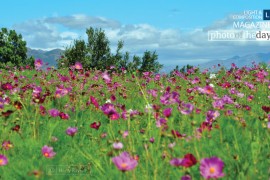
Harry Ravelo has captured this delicate, hidden world in his image titled Cosmo Field. It is a gentle reminder that sometimes, the most profound views are found by simply changing our level of engagement with the earth. Will you join me in looking a little closer at the ground today?