
The Architecture of Silence
In the nineteenth century, naturalists became obsessed with the snowflake. They spent hours hunched over black velvet, waiting for the perfect, singular crystal to land, only to watch it vanish into a bead of water at the slightest suggestion of human warmth. There is a profound, quiet violence in that transition—the way something so structurally complex, so mathematically precise, simply surrenders its form to the air. We spend our lives building things that we hope will outlast us: stone walls, reputations, habits. Yet, the most exquisite things we ever witness are those that exist only for a heartbeat, defined entirely by their own fragility. We look for permanence in a world that is fundamentally fluid, forgetting that the beauty of a pattern is often tied to the fact that it cannot be held. If we could freeze time, would we still find the same wonder in the ice, or would the stillness eventually feel like a cage? What remains of a shape once the cold has retreated?
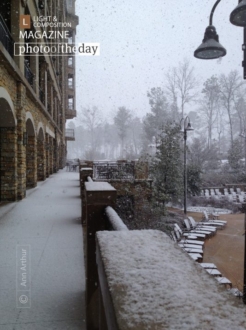
Ann Arthur has captured this fleeting geometry in her work titled Frostin’ Up My Windowpane. It serves as a gentle reminder that even the most temporary shifts in our environment can hold a permanent place in our memory. Does this crystalline dance make you feel a little colder, or perhaps a little more still?