The Architecture of Salt and Bloom
We often mistake the edge of the world for a boundary, a place where the earth finally loses its nerve and surrenders to the tide. But the coast is not a conclusion; it is a conversation. It is where the stubborn, rooted things of the soil reach out to touch the fluid, restless memory of the sea. I think of the way we build our own lighthouses—those tall, white intentions we construct to guard against our own darkness. We place them on the cliffs of our lives, hoping to guide the wandering parts of ourselves back to a familiar shore. Yet, the ground beneath is always shifting, blooming with wild, succulent color that asks for nothing and survives on nothing but salt and fog. There is a quiet bravery in standing where the land ends, holding a light against the vast, indifferent blue, while the flowers at your feet drink the spray of the storm. Does the light keep the sea away, or does it simply help us see how deep the water truly goes?
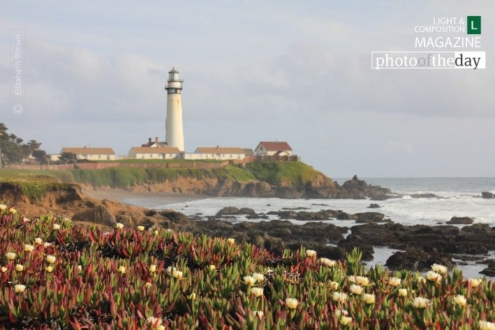
Elizabeth Brown has captured this delicate balance in her image titled Pigeon Point Light Station. It serves as a reminder that even our most solid structures are merely guests in a landscape that is constantly rewriting itself. Does the sight of this beacon make you feel anchored, or does it make you want to drift?