
The Architecture of Play
We often mistake the city for its infrastructure—the concrete, the steel, the zoning laws that dictate where we sleep and where we toil. But the true geography of a place is written in the margins, in the spaces where the formal design fails to reach. When we observe the environment through the eyes of a child, the city ceases to be a functional grid and becomes a landscape of potential. A scrap of wood, a patch of dirt, or a quiet alleyway transforms into a kingdom. This is the hidden urbanism of the overlooked: the way individuals carve out autonomy within the constraints of their environment. It forces us to consider the invisible boundaries of our own neighborhoods. Who is granted the luxury of leisure, and who is left to negotiate their own world in the shadows of our industry? The city is not just a collection of buildings; it is a negotiation of space, and some of the most profound structures are built by those who have the least.
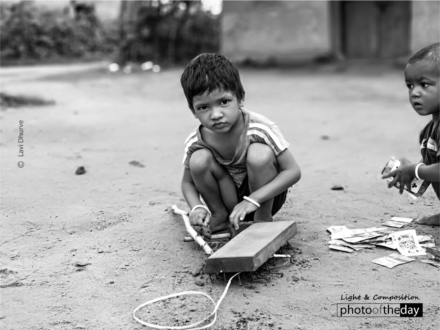
Lavi Dhurve has captured this quiet resilience in the image titled Playing with a Wooden Car. It serves as a stark reminder of how we inhabit the spaces left behind by the adult world. Does this environment offer enough room for the imagination to thrive?

 (c) Light & Composition University