
The Architecture of Play
In the physics of childhood, momentum is not merely a measurement of mass and velocity; it is a form of social gravity. When we are small, we move in clusters, tethered to one another by invisible threads of shared intent. We do not walk; we cascade. We do not navigate space; we inhabit it with a collective, kinetic urgency that defies the rigid geometry of the streets. Adults, by contrast, move with a heavy, singular purpose, our paths dictated by the clock and the curb. We have forgotten the logic of the chain, the way a group can become a single, breathing organism that turns corners with the grace of a river. There is a profound, unscripted wisdom in this tethering—a refusal to be solitary in a world that insists on individual boundaries. If we could only remember how to link our arms and surrender to the momentum of the group, would the city still feel so vast, or would it finally begin to feel like a playground?
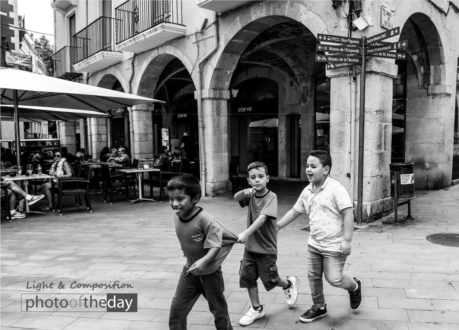
Denis Talypov has captured this exact, fleeting momentum in his image titled Fun Game. It is a reminder of how we once moved through the world before we learned to walk alone. Does this scene stir a memory of your own childhood rhythm?