The Architecture of Passage
We often mistake the city for a collection of static objects—concrete, steel, and glass. But the city is actually a verb; it is a process of movement, a constant negotiation between the individual and the infrastructure designed to contain them. When we walk through these transitional spaces, we are participating in a silent contract with the urban planners who dictate our routes. These tunnels and corridors are rarely neutral; they are conduits of efficiency, designed to move bodies from one point of consumption to the next with minimal friction. Yet, there is a profound vulnerability in being a single figure within such an imposing geometry. It highlights the tension between our desire for autonomy and the rigid, pre-determined paths laid out for us by the powers that be. Who is this space intended to serve, and what happens to the human spirit when it is funneled through the cold, calculated logic of modern transit? Does the path lead us to a destination of our own choosing, or are we merely ghosts haunting someone else’s blueprints?
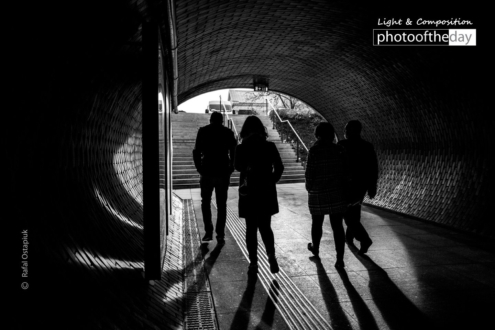
Rafal Ostapiuk has captured this tension beautifully in his image titled Tunnel. By placing a lone individual within this stark, linear environment, he forces us to confront the scale of our own movement through the urban landscape. How do you feel when you are the only one walking through a space designed for the masses?