The Architecture of Memory
We often speak of history as if it were a solid thing, a stone wall we can touch or a book we can pull from a shelf. But memory is rarely so cooperative. It behaves more like light caught in a doorway—shifting, blurring at the edges, refusing to sit still for the portrait we try to paint of it. When we look back, we do not see the past in sharp, static lines. Instead, we see a rush of impressions, a smear of color where the present moment bleeds into the ghosts of what came before. It is a dizzying sensation, this feeling of being pulled forward while simultaneously being dragged backward by the weight of old brick and forgotten whispers. We are constantly moving through spaces that were built by hands long gone, and yet, the air still holds the vibration of their presence. If we stand perfectly still, can we feel the walls breathing? Or are we merely chasing the echoes of a time that has already slipped through our fingers like sand?
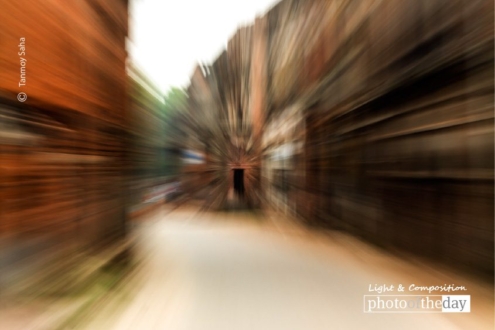
Tanmoy Saha has captured this elusive dance in his work titled Flash Back of Panam City. He invites us to stand in the center of a fading era and feel the rush of time itself. Does the past feel like a destination to you, or is it just a blur we are passing through?