
The Architecture of Memory
We often mistake the city for its skyline, for the glass and steel that announce a city’s ambition to the world. But the true document of a place is found in the quiet, crumbling corners where history has not yet been scrubbed away. These spaces are not merely shelters; they are vessels for the lives that have unfolded within them, holding the weight of generations in their peeling paint and uneven floors. When we prioritize the new, we inadvertently erase the people who built their identities around the old. We lose the informal geography of belonging—the way a person occupies a room that has aged alongside them. There is a profound tension between the city that demands constant renewal and the city that insists on remembering. Who is granted the right to age in place, and who is pushed aside to make room for the sterile promise of progress? When the walls finally give way, what happens to the stories that were never written down?
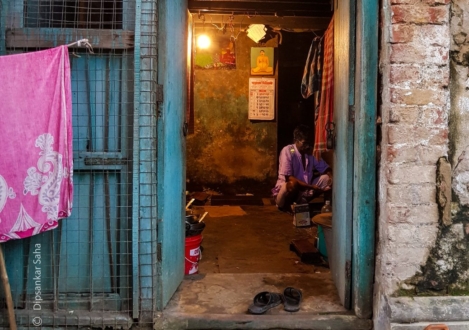
Dipsankar Saha has captured this delicate intersection of time and humanity in his image titled Old Places Have Soul. It invites us to consider the dignity of a life lived within the layers of a changing city. Does this space belong to the man, or does he belong to the space?