
The Architecture of Memory
Time is not a straight line, but a layering of stone and breath. We walk through cities built upon the ghosts of older intentions, where the sharp edges of the new press against the weathered skin of the past. There is a particular kind of silence that lives in the masonry of a clock tower—a stillness that remembers the rhythm of horses’ hooves and the slower, deeper pulse of a world before the hum of electricity. We are all, in our own way, trying to anchor ourselves to something that refuses to vanish, reaching for the permanence of brick and mortar while the wind of the present pulls at our sleeves. To look up is to acknowledge that we are merely guests in a long, unfolding story, standing beneath the eaves of history while the clouds drift by, indifferent to our hurry. If the stones could speak of the thousands who have looked up at them, what secrets would they whisper about the nature of waiting?
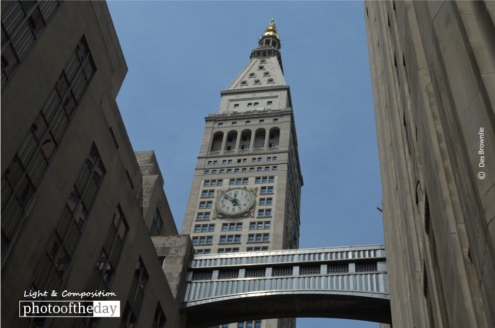
Des Brownlie has captured this quiet dialogue between eras in the image titled MET Life Tower and Bridge. It serves as a gentle reminder that even in the rush of the city, we can find a moment to stand still and listen to the echoes of the past. Does the weight of history make you feel smaller, or more connected to the world around you?