
The Architecture of Frost
When water transitions into ice, it does not simply harden; it organizes itself into intricate, hexagonal lattices, a process of crystallization that forces the liquid to shed its chaotic fluidity for a rigid, geometric grace. This is a state of suspended animation, a pause in the cycle of decay where the internal structure of a thing is held perfectly still, preserved against the inevitable thaw. We often fear this kind of stillness, viewing our own moments of dormancy as a loss of momentum or a failure to thrive. Yet, in the natural world, the frost is not an end, but a protective casing—a way of shielding the essential core until the conditions for growth return. We are so quick to rush toward the bloom that we forget the necessity of the freeze, the quiet interval where we define our own edges and solidify our resolve. If we allowed ourselves to be held in such stillness, what hidden patterns might we reveal?
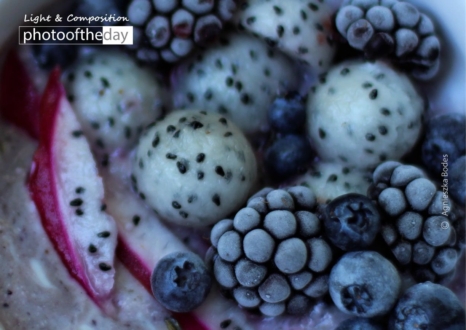
Agnieszka Bodes has taken this beautiful image titled Nature’s Candy, which captures that precise, crystalline pause in the life of a fruit. Does the sight of this frozen moment make you feel the bite of the cold, or the promise of what lies beneath the ice?