The Architecture of Exhaustion
We often mistake the skyline for a neutral backdrop, a mere canvas for the setting sun. But the horizon is never neutral; it is a ledger of our priorities. When we look at the silhouette of a city, we are reading a history of extraction and utility. We see the chimneys and the cooling towers—the heavy, permanent markers of an industrial logic that demands we sacrifice the sky to fuel the machine. These structures were not built for the comfort of the pedestrian or the flourishing of the neighborhood; they were built for output. They define the limits of our movement and the quality of the air we share. We have become experts at living in the shadow of these giants, learning to find beauty in the very things that displace our own humanity. It is a strange, quiet surrender to accept that the most prominent features of our landscape are the ones that care the least about our presence. Who is the city actually built to serve, and what remains of the commons when the industry goes dark?
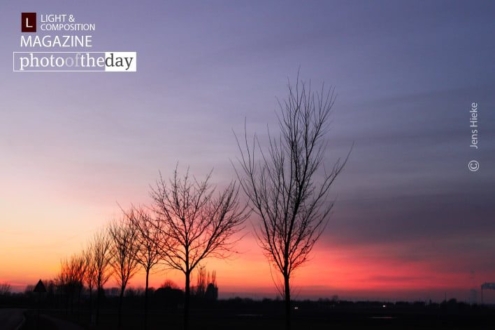
Jens Hieke has captured this tension in his image titled Evening Sky. He invites us to consider how our heritage and our industrial ambitions share the same fading light. Does this view feel like a home, or like a place we are simply passing through?