The Architecture of Erosion
We often speak of permanence as if it were a virtue, a solid foundation upon which we build our lives and our certainties. Yet, if you spend enough time watching the tide, you realize that the earth is not a static stage, but a slow, relentless conversation between stone and salt. The coastline is a map of what has been surrendered. It is a reminder that to exist is to be shaped by forces far larger than our own intentions. We are all, in a sense, being carved by the weather of our days—the persistent rain, the sudden gusts, the inevitable pull of the deep. There is a quiet, terrifying beauty in this thinning of the edges, a testament to the fact that nothing remains exactly as it was, and yet, the essence of the thing persists in its new, fractured form. If the mountain eventually becomes the sea, what part of us is currently being washed away to become something else entirely?
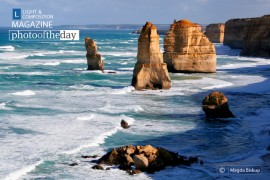
Magda Biskup has captured this dialogue between land and water in her work titled Twelve Apostles. She invites us to witness the resilience of stone against the weight of a turbulent sky. Does the sight of these standing giants make you feel more grounded, or more fleeting?