The Architecture of Equality
Urban space is rarely neutral. Usually, the city is a map of hierarchies, where the quality of one’s housing or the accessibility of a plaza signals status, class, and exclusion. We build walls to keep the ‘other’ out and design streets that prioritize the flow of capital over the presence of people. Yet, there are rare moments where the built environment is stripped of these markers. When a space is designed to erase the visual language of rank, we see a different kind of geography emerge—one defined by radical uniformity. In these instances, the individual dissolves into a collective, and the architecture serves not to divide, but to hold a singular, shared intent. It forces us to consider what happens to the city when the ego of the occupant is removed, and the street, or the square, becomes a vessel for something larger than the sum of its parts. If we could strip away the status symbols of our own neighborhoods, what would remain of our sense of belonging?
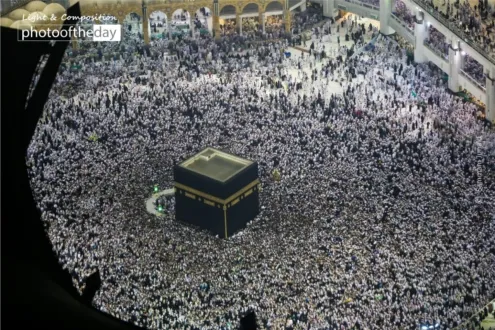
Sammam Junaid has captured this profound sense of unity in the image titled Brotherhood. By documenting a space where the visual markers of class are replaced by a sea of white, the photographer invites us to reflect on the power of shared purpose in the urban landscape. Does the city become more human when we stop trying to stand out?