
The Architecture of Echoes
We are often told that silence is an absence, a hollow space waiting to be filled by the noise of our own making. But there is a weight to the quiet that gathers in places built for transit, a subterranean hum that lingers long after the crowd has dispersed. It is in these vaulted, hollowed-out arteries of the city that we find the true geometry of solitude. The walls hold the memory of a thousand hurried footsteps, a rhythmic ghost-dance etched into the tiles and the steel. We pass through these corridors like water through a pipe, rarely stopping to notice how the architecture itself breathes, how it curves to accommodate the weight of our collective restlessness. To stand in such a space is to realize that we are merely temporary currents in a permanent structure, small pulses of heat in a cold, repeating frame. If the walls could speak of the thousands who have vanished into the dark, would they tell us of the destination, or only of the long, echoing wait?
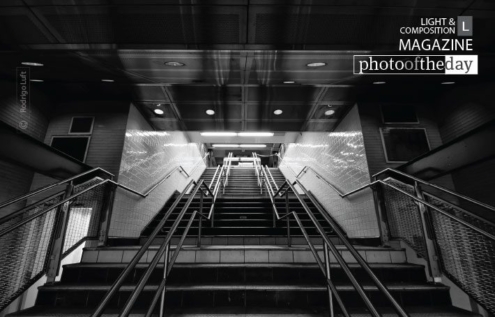
Rodrigo Luft has captured this stillness in his work titled New York City Subway. It is a quiet invitation to find beauty in the spaces we usually rush through without a glance. Does the symmetry of the path make you feel more grounded, or more adrift?