The Architecture of Decay
In the quiet corners of a garden, we often mistake the end for a failure. We look at the shriveling petal or the darkening stem and see only the loss of what was once vibrant. Yet, if we linger long enough, we begin to see that nature does not simply discard its history; it folds it into the next iteration. There is a profound, structural integrity to the way a plant holds onto its own past, even as it prepares for the seed. It is a slow, deliberate alchemy. We are so conditioned to celebrate the bloom that we forget the quiet, persistent work of the aftermath. To watch something fade is not to watch it disappear, but to witness the reveal of its true skeleton, the hidden geometry that supported the color all along. Does the fruit feel the weight of the flower that came before it, or is it simply relieved to finally be itself, unburdened by the need to be beautiful?
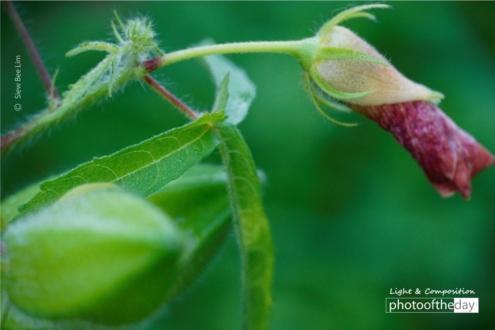
Siew Bee Lim has captured this transition in the image titled Abelmosk. It is a gentle reminder that there is a distinct, quiet dignity in the stages of life we usually overlook. How do you find beauty in the parts of your own story that are beginning to fade?