
The Architecture of Crumbs
In the quiet corners of a kitchen, there is a specific kind of geometry that goes unnoticed. It is found in the way dough yields to the heat, folding itself into layers that mimic the strata of the earth or the pages of a well-worn book. We often speak of food as fuel, a utilitarian necessity to keep the clockwork of the body moving, but there is a deeper, more structural truth to the things we prepare by hand. To bake is to engage in a slow, deliberate conversation with time and temperature. It requires a surrender of control, a trust that the alchemy of the oven will transform simple, raw elements into something that holds both warmth and memory. We build these small, edible monuments not just to satisfy hunger, but to mark the passage of a morning or the quietude of an afternoon. When the crust finally shatters, what remains is not just a meal, but the evidence of a process—a fragile, golden map of where we have been. If the act of making is a form of prayer, what does the finished shape tell us about the hands that held it?
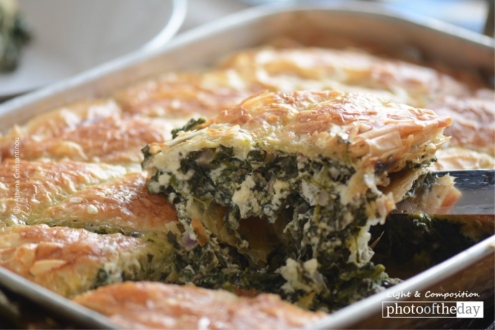
Athena Constantinou has captured this quiet ritual in her beautiful image titled Spanakopita. It invites us to look past the plate and into the intricate, layered history of a tradition. Does the sight of it make you hungry for the story behind the meal?