The Architecture of Comfort
In the quiet corners of a house, one often finds the most profound geometry. It is not found in the blueprints or the load-bearing walls, but in the way a hand finds a shoulder, or how a small body leans into the gravity of another. We spend our lives building structures to keep the world out, yet the most essential architecture is the one we construct between ourselves during moments of sudden, sharp distress. It is a fragile, invisible scaffolding. When the familiar ground shifts—when a child realizes the vastness of a street or the temporary absence of a guardian—the world becomes an overwhelming expanse of noise and dust. In that vacuum, the instinct to reach out is our oldest language. It is a silent negotiation of safety, a way of saying, I am here, and therefore, you are not entirely alone. We are all, at various turns, both the one who is trembling and the one who offers a steadying touch. Does the weight of the world ever truly lessen, or do we simply grow better at sharing the burden?
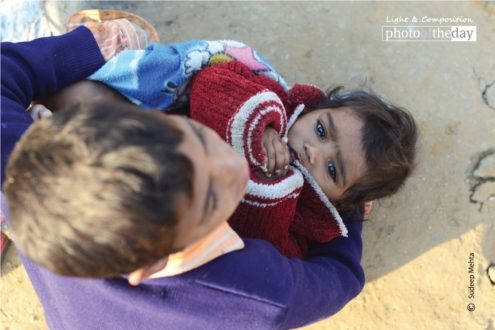
Sudeep Mehta has captured this delicate exchange in his image titled The Little Crying Kid. It serves as a gentle reminder of how we hold one another when the path ahead feels too wide to walk alone. Does this scene stir a memory of someone who once stood in the gap for you?