
The Architecture of Care
We often mistake the city for its hard surfaces—the concrete, the glass, the steel grids that dictate our movement. But the true geography of a place is found in the soft spaces between people. It is in the way a hand is held or a shoulder is leaned upon that we see the real infrastructure of survival. In a world designed for efficiency and transit, these small, intimate anchors of human connection are radical acts of resistance. They remind us that a neighborhood is not merely a collection of buildings, but a living, breathing social contract. Who is allowed to rest here? Who is permitted to be vulnerable in public? When we look at the margins of our streets, we see the invisible networks of support that hold the city together long after the planners have gone home. If the city is a document, then these quiet, private moments are the footnotes that explain why we choose to stay. Where do we find the space to belong when the city demands we keep moving?
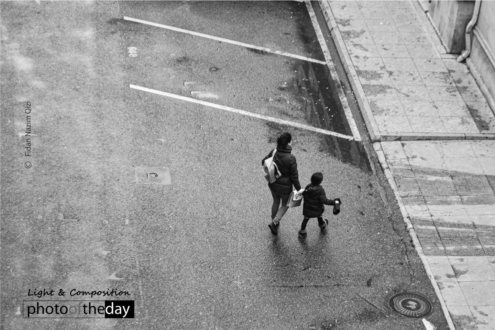
Fidan Nazim Qizi has captured this beautifully in her work titled Mother and Son. It is a poignant reminder of how the most profound human geographies are built within the smallest of circles. Does this image change how you see the public spaces in your own neighborhood?