The Architecture of Belonging
We often mistake the city for its infrastructure—the concrete, the steel, the zoning lines that dictate where one life ends and another begins. But the true city is found in the gaps between these structures, in the informal networks that emerge when people are left to navigate the margins of a planned environment. When formal systems fail to provide, the community builds its own geography of support. These bonds are not merely social; they are survival strategies, a way of reclaiming space in a world that frequently renders the inhabitant invisible. To observe a group of people claiming their territory is to witness the city functioning as it was meant to: as a vessel for human connection rather than a machine for efficiency. It forces us to reconsider the hierarchy of our streets and who truly holds the right to occupy them. If the city is a document of our collective priorities, what does it say about us when the most vibrant life is found in the places we have chosen to overlook? Who is the city actually for, and what happens when those on the periphery decide they are the center?
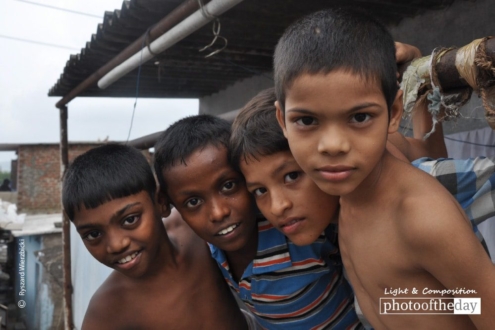
Ryszard Wierzbicki has taken this beautiful image titled A Gang of Friends. It serves as a poignant reminder that even in the most challenging urban environments, the human spirit carves out its own home. Does this image change how you perceive the boundaries of your own neighborhood?