The Architecture of Belief
Cities are often read as secular machines—grids of commerce, transit, and utility. Yet, the urban fabric is perpetually stitched together by the invisible threads of private devotion. We map the city by its monuments and its markets, but we rarely account for the quiet, portable geographies that people carry within them. Faith is a form of spatial practice; it creates a sanctuary that exists independently of the concrete walls surrounding it. When an individual opens a text or performs a ritual, they are effectively carving out a territory of belonging that no city planner can zone or regulate. This is the hidden infrastructure of the metropolis: the internal landscapes that allow people to remain anchored while the world outside shifts and accelerates. It raises the question of how much of our urban experience is defined by the physical structures we inhabit, and how much is built by the sacred spaces we carry in our hands?
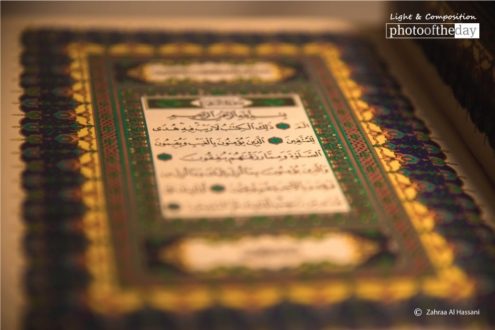
Zahraa Al Hassani has taken this beautiful image titled Holly Verses. It offers a glimpse into the quiet, spiritual architecture that exists within the bustling city of Denver. Does this image change how you perceive the private spaces hidden within the public grid?