
The Architecture of Ascent
We often mistake the wilderness for a space devoid of human mark, a pristine vacuum untouched by the gears of civilization. Yet, even in the most remote altitudes, we find the persistent reach of infrastructure. We build funiculars, cut paths, and install markers to domesticate the vertical, turning the sublime into the accessible. This is the geography of ambition: the desire to stand where the air is thin and the view is vast, tethered to the valley floor by steel cables and engineering feats. It reveals a fundamental tension in how we occupy the earth. We seek the silence of the peaks, yet we bring the tools of the city with us to ensure our safe return. Who is this landscape truly for—the mountain that remains indifferent to our presence, or the traveler who requires a machine to witness its majesty? Does the path exist because the mountain invited us, or because we refused to leave it alone?
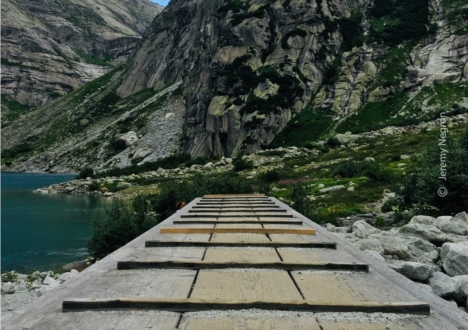
Jeremy Negron has taken this beautiful image titled Hiking in Switzerland. It captures the intersection of human movement and the heavy, ancient stillness of the high Alps. When you look at the scale of the landscape, do you see a place of escape, or a place of human construction?