The Architecture of Ambition
Cities are rarely built for the people who inhabit them; they are built for the people who own them. We often mistake the skyline for a map of progress, ignoring the fact that these glass-and-steel monoliths are monuments to capital, designed to project strength rather than foster connection. When we look at the urban edge, where the rigid geometry of the financial district meets the fluid, indifferent movement of the water, we are seeing a negotiation between nature and the machine. Who is permitted to stand at this threshold? Is this space a public commons, or is it a curated stage for the elite to observe the city from a safe, sanitized distance? The true character of a place is not found in its tallest spire, but in the accessibility of its margins. We must ask ourselves if these grand structures are meant to shelter the collective life of the city, or if they are merely mirrors reflecting our own displacement back at us. If the city is a document, what does this particular chapter say about who is allowed to belong?
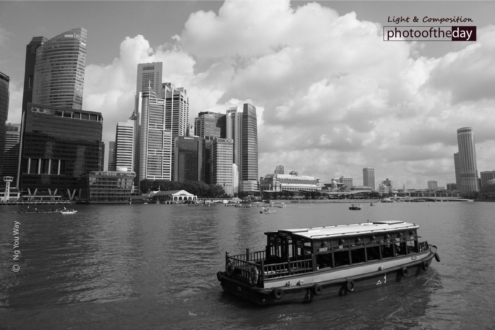
Ng You Way has taken this beautiful image titled The Sunny Island. It captures the tension between the built environment and the harbor, inviting us to consider the human cost of such polished development. Does this landscape feel like a home, or a display case?