
The Architecture of Aim
The Y-shaped branch of a willow or a dogwood is a marvel of structural tension, designed by the tree to distribute the weight of leaves and fruit across a widening canopy. In the hands of a child, however, that same fork is repurposed into an instrument of intent. We spend our early years obsessed with the mechanics of trajectory, learning how to hold our breath and steady our hands to bridge the gap between where we stand and where we wish to strike. It is a strange, formative alchemy—taking a piece of the wild, stripped of its bark and leaves, and binding it with rubber to create a tool for focus. As we age, the targets change from stones and distant marks to the more abstract goals of our adult lives, yet the physical memory of that tension remains in our muscles. We are always looking for the right grip, the perfect pull, and the moment of release. What happens to the aim of a person when the target finally disappears?
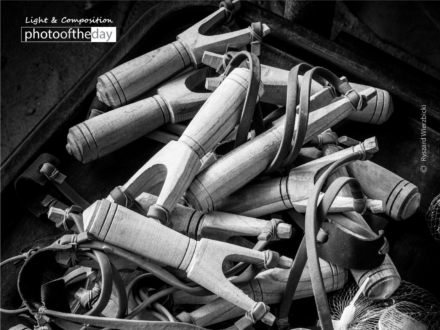
Ryszard Wierzbicki has captured this quiet tension in his image titled Thai Slings. These wooden frames sit in a state of waiting, holding onto the potential energy of a thousand forgotten afternoons. Does looking at them pull you back to a time when your only concern was the flight of a stone?
 (c) Light & Composition University