
The Architecture of Absence
We often speak of ruins as if they were merely failures of utility, places where the work stopped and the rust began. Yet, there is a particular dignity in the way a structure surrenders to the elements. When the human hand withdraws, the earth does not simply reclaim the space; it begins a slow, quiet conversation with the materials we left behind. Wood softens, iron bleeds into the soil, and the sharp angles of our ambition are gradually rounded off by the wind and the snow. It is a reminder that our presence here is always a temporary arrangement, a brief punctuation mark in a much longer sentence written by the mountains. We build to hold back the wild, but in the end, the wild is the only thing that remains to tell the story of what we once tried to do. If a building stands empty, does it still hold the echoes of the people who walked its floors, or does it eventually become something entirely new, something that no longer requires a name?
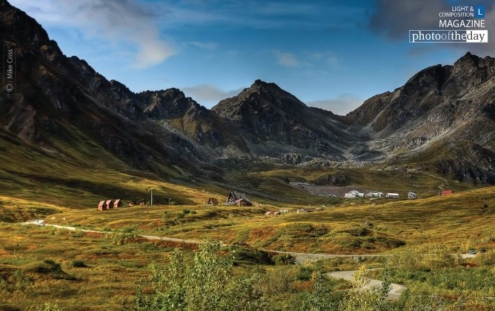
Mike Criss has captured this quiet transition in his work titled Hatcher Pass. It serves as a gentle reminder of how history settles into the landscape when we finally step away. Does the silence of such a place feel like a loss to you, or does it feel like a kind of peace?