Quickly Burger! by Pedro Pio
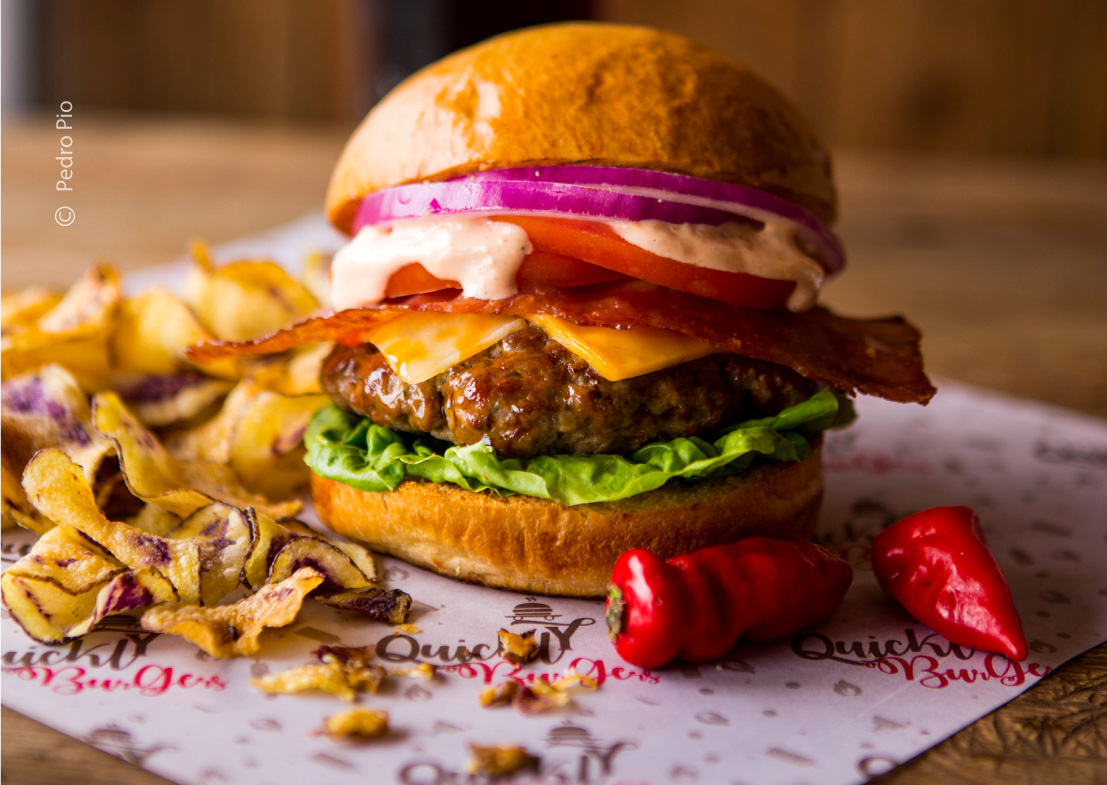
Capturing the essence of a meticulously crafted hamburger, the photographer focuses on the artisanal process behind the meal. The image emphasizes a rustic, raw aesthetic, highlighting the complex assembly of ingredients, toothpicks, and technical elements that define the burger's construction. By framing the subject to showcase the tactile skill required to build such a creation, the photographer transforms a culinary challenge into a compelling visual narrative. The award-winning quality of this piece lies in its ability to elevate a common food item into a gritty, textured study of craft and composition.
Pedro Pio
Pedro Pio is a versatile director, photographer, and screenwriter who honed his craft at the International Film School of Cuba, specializing in documentary direction. His acclaimed short films, including the Cannes-nominated 'Maya' and the award-winning 'Dogs,' have been featured at prestigious festivals worldwide. Now based in Madrid, Spain, he brings his cinematic eye and narrative expertise to the world of food photography, where he explores the intersection of culinary artistry and visual storytelling.
Resonance Score Breakdown
Transparency Note: The resonance score (9.2/20) is calculated based on social engagement metrics collected before the award announcement.
Expert Photography Reviews · 5
The Hunger of the Void
It is 3:14 am. The house is holding its breath, and I am staring at the wall, wondering why we spend our days trying to build things that are meant to be destroyed. We stack layers of meaning, of ambition, of routine, just like a child building a tower of blocks.
Read the reflection →The Architecture of Hunger
We often treat the act of eating as a mere punctuation mark in the day, a quick breath taken between the sentences of our labor. Yet, there is a quiet, structural integrity to the things we consume—a layering of intent that mirrors how we build our own lives.
Read the reflection →Reviews & Comments
Share your thoughts about this award-winning photograph. Your reviews contribute to the community engagement score.
There’s a quiet, heavy stillness in how the light catches those raw edges. It’s not just food; it’s a landscape of textures, built with the same patience I’ve spent waiting for the sun to crest a ridge. I find myself leaning in, almost smelling the char and the cooling grease. He stood there, listening to the kitchen’s rhythm, waiting for the ingredients to settle into this honest, gritty truth. It’s deeply human, and I’m moved.
Grease on paper. The weight of the burger sits heavy. It’s a study in excess, yet I’m drawn to the shadows creeping across the table. The frame is crowded, but the edges hold a quiet tension. I find myself wanting to push the plate aside to find the wood grain beneath. Nothing here is accidental. The empty corner is not empty. It’s where the hunger lives. It’s a relief to finally look away.
We look at this burger and we don’t just see lunch; we see the hands that built it. Pedro Pio listened to the rhythm of the kitchen before he clicked. Those toothpicks aren’t just holding bread; they’re holding a story of labor and pride. It’s gritty, it’s honest, and honestly, it makes me hungry for the human effort behind the grease. This is a photograph that asks to be returned to, again and again.
f/2.8 at 50mm. A shallow plane of focus that isolates the grease and the toothpick, forcing the viewer into the assembly. It’s a calculated risk. The shutter speed is fast enough to freeze the texture of the bun, but the bokeh is aggressive. I’ve seen enough food shots to know this is usually a crutch, yet here, it’s precise. It makes me hungry, which is a rare, irritating admission for me to make. It works.
It’s a gritty, tactile study that echoes the stark, unvarnished still lifes of Edward Weston, yet Pio trades the organic pepper for the chaotic architecture of a burger. The toothpick’s intrusion feels like a deliberate subversion of the polished commercial aesthetic I’ve endured for decades. It’s messy, it’s raw, and honestly? I’m genuinely thrilled to see someone treat fast food with the structural rigor usually reserved for the Bauhaus masters. It’s a refreshing, greasy departure.