Tall Buildings by Ng You Way
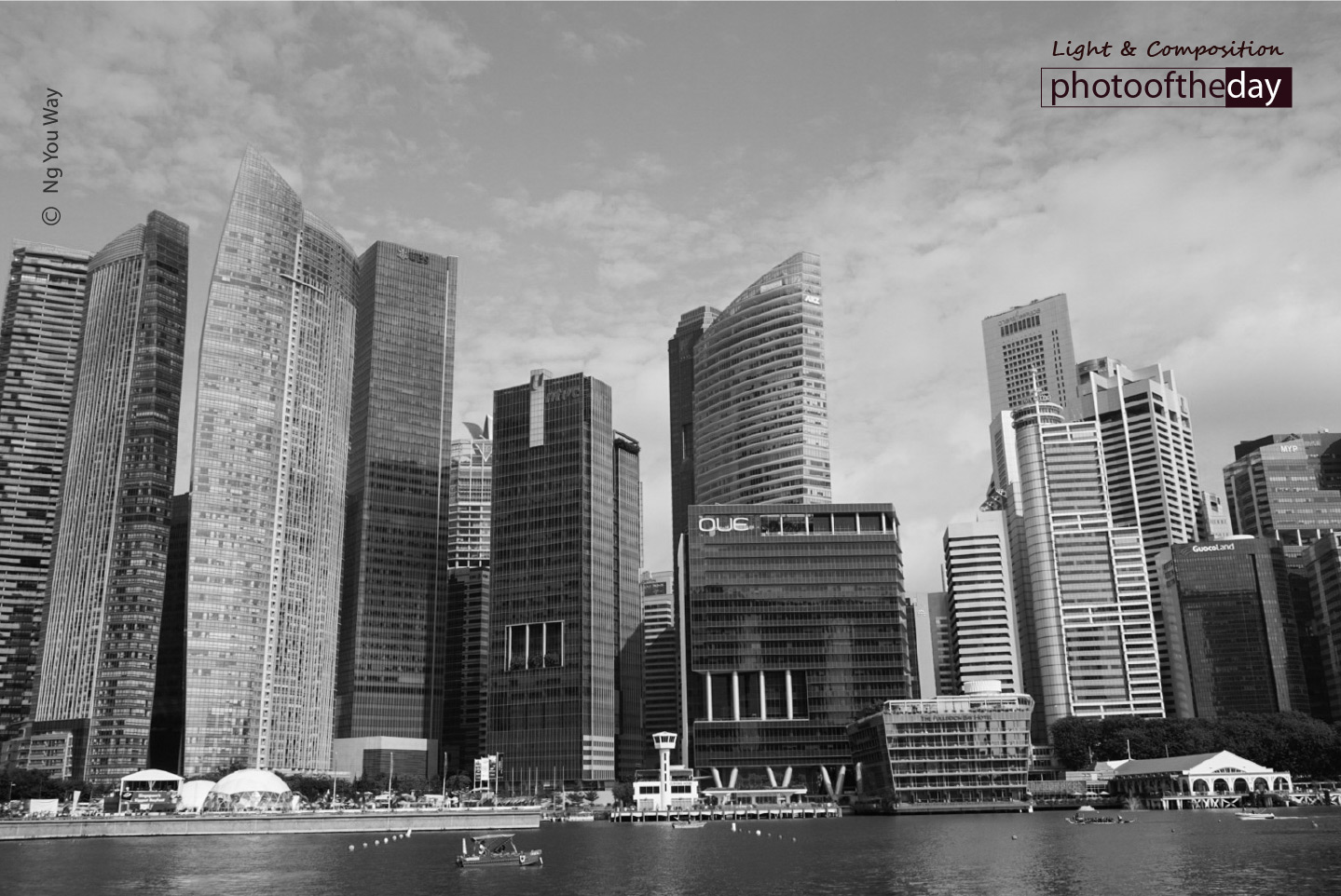
Captured at The Esplanade in Singapore, this architectural study reflects the relentless energy of a global financial hub. The photographer frames the towering skyline against the backdrop of a bustling port, emphasizing the contrast between the city's high-stakes business environment and its status as a premier tourist destination. By focusing on the interplay of light and structural geometry, the image captures the ambition of a city striving for world-class recognition. The composition is award-worthy for its ability to transform a familiar urban landscape into a narrative of progress, industry, and the vibrant, fast-paced rhythm of Singaporean life.
Ng You Way
Born and raised in Singapore, Ng You Way is a dedicated photographer who discovered her passion for the craft later in life. Driven by a deep curiosity for diverse cultures and global landscapes, she balances her professional life with an artistic pursuit of documenting the world as she perceives it. Through her lens, she seeks to share unique perspectives and narratives, continuously evolving her technique while exploring the intersection of human activity and architectural form.
Resonance Score Breakdown
Transparency Note: The resonance score (11.8/20) is calculated based on social engagement metrics collected before the award announcement.
Expert Photography Reviews · 8
The Hum of Steel
The taste of iron always lingers on the back of my tongue when the air grows thin and sharp. It is the metallic tang of a city that never stops breathing, a cold, electric hum that vibrates through the soles of my feet.
Read the reflection →The Architecture of Stacking
When a colony of termites builds a mound, they do not work from a blueprint; they respond to the pheromones of their neighbors, stacking earth in a feedback loop that rises toward the sun.
Read the reflection →Reviews & Comments
Share your thoughts about this award-winning photograph. Your reviews contribute to the community engagement score.
The focal plane here is razor-thin, pushing the lens toward its diffraction limit against the Esplanade’s complex geometry. I’m genuinely moved by how the glass resolves those distant, shimmering port lights; it’s a masterclass in managing chromatic aberration across high-contrast edges. It’s not just architecture; it’s the physics of light rendered with clinical, breathtaking precision. You don’t often see such rigorous optical discipline in urban studies, and frankly, it’s a joy to behold.
The Esplanade’s geometry dictates the frame. Vertical lines slice the picture plane, creating a rigid, unforgiving grid. It’s a calculated exercise in spatial tension. The weight of the skyline presses against the negative space of the harbor, forcing the eye into a disciplined rhythm. It doesn’t rely on sentiment. I’ve grown weary of such clinical precision, yet this structure holds. The composition earns its authority through sheer, unyielding architectural mass. It’s a rare, cold triumph.
The Esplanade’s iconic spikes usually demand a tactile, rhythmic reading, but here they’re flattened into a mere backdrop for the skyline’s cold ambition. It’s a shame. By prioritizing the distant, shimmering fenestration over the threshold’s actual human scale, the frame omits the very weight of the structure. I’d love to feel the concrete’s texture, yet it’s lost to this glossy, distant geometry. It’s technically sharp, sure, but it misses the building’s true, pulsing heart.
Singapore’s Esplanade is a familiar stage, yet one wonders how many hours Ng spent dodging the humidity before the light finally settled into this precise geometry. It’s a clean, sharp study, though I’d have preferred a bit more grit in the shadows to ground that polished skyline. Still, I’ve spent enough nights shivering in the dark to recognize the discipline here. It’s a respectable effort, earned through the sort of patience that usually goes unrewarded.
Singapore’s skyline gleams, but at what cost to the human scale? Ng You Way’s frame turns the Esplanade into a cold, geometric abstraction of capital. I feel a genuine chill looking at these glass monoliths; they don’t invite us in, they demand our submission. Whose ambition are we actually celebrating here? By stripping away the messy, vibrant street life, the photographer renders the city a sterile playground for the elite. Is this progress, or just erasure?
Singapore’s Esplanade is a geometric beast, but architecture needs a pulse. You’ve captured the steel, sure, but where’s the life? Winogrand would’ve waited for a stray shadow or a frantic commuter to break that rigid symmetry. It’s technically sharp, but it feels static. I’m looking for the chaos, the friction of the city. One tenth of a second later and the light might’ve danced. It’s clean, but it doesn’t make my heart race.
Singapore’s steel and glass at The Esplanade are undeniably sharp, but I find myself searching for a pulse. Where are the people? Architecture is just a shell without the hands that built it or the souls who navigate its shadows. It’s technically precise, sure, but it feels cold. I’m left craving a single human face to ground all this ambition. Without that connection, it’s just a postcard of a city that’s forgotten to breathe.
Before the eye identifies the steel, something in the chest tightens. It’s the vertigo of verticality, that sudden, sharp activation of the inner ear. Looking at Ng’s Esplanade, I feel a strange, cold loneliness—the kind that hits when you’re surrounded by too much ambition. When I return to it, the glass feels heavier, pressing against my own breath. It doesn’t just show a city; it forces you to inhabit its relentless, towering, beautiful indifference.