Eye Contact by Rob van der Waal
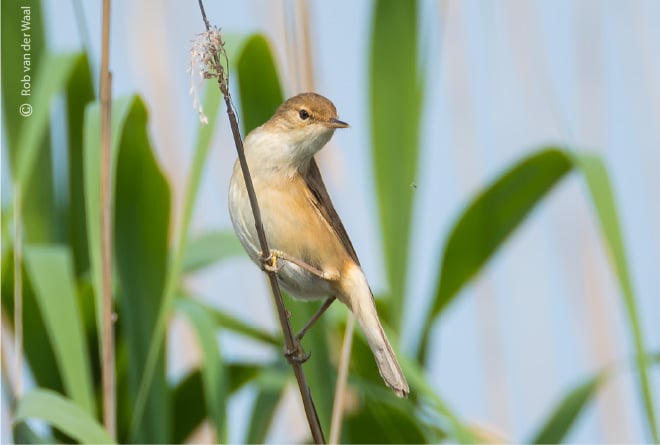
Capturing the elusive Eurasian Reed Warbler requires immense patience and a keen eye for fleeting moments. Known for their rapid movements and tendency to remain hidden within dense reeds, these birds are notoriously difficult to photograph. During a recent excursion, the photographer successfully anticipated the bird's behavior, capturing it as it paused briefly on a stem. This award-winning image is defined by its technical precision and the intimate connection established with the subject, showcasing the photographer's ability to turn a split-second encounter into a compelling, high-detail wildlife portrait.
Rob van der Waal
Born in Rotterdam in 1957, Rob van der Waal was introduced to the art of photography by his father, a dedicated enthusiast who maintained a home darkroom. Largely an autodidact, he refined his craft through persistent practice and a deep-seated passion for nature and maritime environments. His photographic style is characterized by a commitment to pure, honest imagery, often focusing on the interplay of light and wildlife. Residing near the harbor area of Hellevoetsluis, he continues to explore the endless possibilities of storytelling through his lens.
Resonance Score Breakdown
Transparency Note: The resonance score (12.0/20) is calculated based on social engagement metrics collected before the award announcement.
Expert Photography Reviews · 6
The Weight of a Glance
I keep a small, tarnished silver thimble in my desk drawer, a relic from a grandmother who spent her life mending what was torn. It is pitted and worn, shaped by the constant, rhythmic pressure of a needle against its surface.
Read the reflection →The Architecture of the Wild
We often speak of the city as a human invention, a rigid grid of stone and glass designed to keep the wild at bay. We build walls to define where the domestic ends and the untamed begins, convinced that we are the only architects of our surroundings.
Read the reflection →Reviews & Comments
Share your thoughts about this award-winning photograph. Your reviews contribute to the community engagement score.
You waited in those reeds until the world went quiet, didn’t you? It’s easy to get lost in the technical sharpness of that D4S, but that’s not what hits me. It’s the eye. You caught a wild thing looking back, and for a second, it wasn’t just a bird; it was a presence. I felt a sudden, sharp stillness looking at this. You didn’t just take a picture. You earned that moment of recognition.
The verticality of the reed stem anchors the frame, providing a necessary fulcrum against the bird’s lateral gaze. It’s a rigid geometry that prevents the subject from drifting into mere sentimentality. The negative space to the left creates a deliberate tension, forcing the eye back toward the sharp, clinical focus of the eye. I’ve rarely seen such structural discipline in wildlife work. It doesn’t just capture a bird; it constructs a precise, architectural equilibrium.
The reed isn’t just a perch; it’s a vertical datum, a structural element anchoring the warbler within a chaotic, organic fenestration of stalks. Van der Waal has captured a threshold moment where the bird’s gaze pierces the void. I’m struck by how the light rakes across the plumage, defining mass against the soft, out-of-focus background. It’s a rare, quiet architecture of nature. I’d almost forgotten how much tension a single, perfectly placed line can hold.
We look at this tiny traveler and we see a soul, not just a bird. Rob waited in the reeds, listening to the wind until the warbler finally held its breath. It’s a quiet, piercing gaze that stops time. I’ve spent my life studying human faces, yet this small creature’s eyes hold a weight I didn’t expect. It’s a portrait that asks to be returned to, reminding us that every life has a story worth hearing.
The reeds at Ketelhaven don’t give up their secrets easily. He must have stood there for hours, muscles aching, listening to the wind shift through the stalks. When the warbler finally emerged, it wasn’t just a bird; it was a pulse of life in the stillness. I feel a strange, quiet ache in my chest looking at that gaze. He didn’t capture it; he waited until the land allowed him to see. It’s breathtaking.
The Reed Warbler’s gaze echoes the clinical precision of Eric Hosking’s mid-century ornithological studies, yet it’s far more intimate. Van der Waal’s use of the 550mm focal length flattens the reeds into a painterly, bokeh-rich backdrop that recalls the soft focus of early pictorialists. I’ve spent decades cataloging avian portraits, but the piercing clarity in this bird’s eye genuinely startled me. It’s a rare, sharp dialogue between modern sensor technology and the timeless patience of the field naturalist.