Space by Joaquín Alonso Arellano Ramírez
In his project 'Space,' Joaquín Alonso Arellano Ramírez explores the concept that a photograph captures not just a subject, but the hidden environment surrounding it. While exploring the natural park of La Estanzuela, the photographer encountered a small subject that immediately struck him as a unique opportunity to frame this philosophy. By isolating the subject against its surroundings, he highlights the often-overlooked negative space that defines a scene. This image is award-worthy for its thoughtful composition and the photographer's ability to transform a simple encounter in nature into a profound visual narrative about the relationship between subjects and their environment.
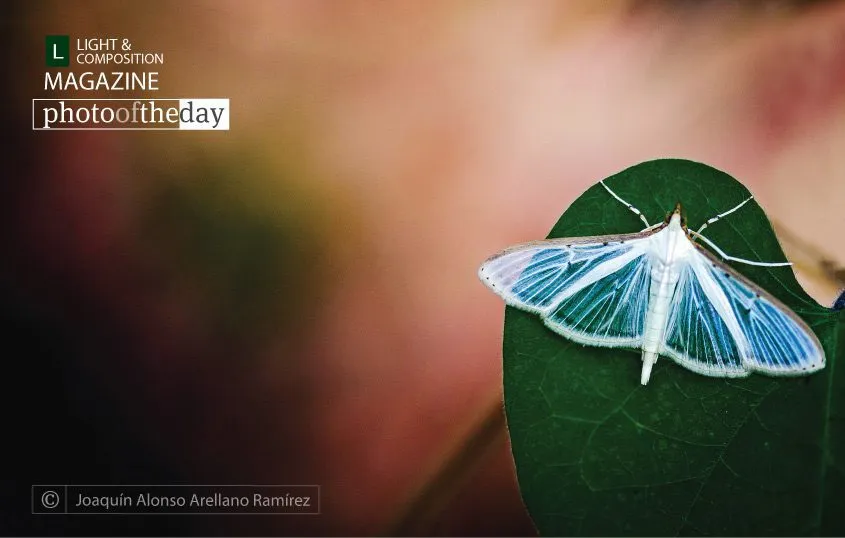
Joaquín Alonso Arellano Ramírez
Based in Monterrey, Mexico, Joaquín Alonso Arellano Ramírez balances a professional career as a software engineer with a deep-seated passion for nature and macro photography. Since acquiring his first DSLR in 2010, he has dedicated his free time to mastering new techniques and exploring the natural world through his lens. His work is characterized by a constant drive to learn and experiment, reflecting a lifelong fascination with photography that began in his childhood.
Resonance Score Breakdown
Transparency Note: The resonance score (12.6/20) is calculated based on social engagement metrics collected before the award announcement.
Expert Photography Reviews · 6
The Weight of the Void
We often speak of objects as if they are islands, self-contained and sovereign. We focus on the texture of a leaf, the curve of a stone, or the sudden, sharp line of a branch, believing that these things possess their own meaning in isolation.
Read the reflection →The Breath Around Things
We often mistake the object for the entirety of the experience. We focus so intently on the leaf, the stone, or the petal that we forget the air that cradles it. Yet, it is the surrounding space that gives the subject its meaning, its permission to exist.
Read the reflection →Reviews & Comments
Share your thoughts about this award-winning photograph. Your reviews contribute to the community engagement score.
At f/3.5, the NIKKOR 105mm renders the focal plane with a surgical thinness that isolates the subject from the chaotic bokeh of La Estanzuela. It’s a delicate balance; the diffraction limit hasn’t softened the fine textures, allowing the light to cling to the subject’s edges with startling clarity. I’m genuinely moved by how the negative space feels almost tangible here. It’s rare to see a lens pushed to resolve such quiet, profound isolation so perfectly.
It’s a masterclass in the long take. The 105mm lens isolates the subject, forcing the eye to linger where the motion stops. I’m genuinely moved by how the negative space breathes; it’s the silence between two lines of dialogue. Ramírez understands that the cut would have been a mistake here. He’s held the frame just long enough for the environment to become the lead character. It’s the shot the editor keeps, perfectly still, perfectly alive.
Light here doesn’t illuminate; it interrogates. By isolating the subject against the void of La Estanzuela, Ramírez forces us to confront the silence between things. It’s a brutal, necessary reduction. I’ve spent hours staring into those dark, unyielding corners, and I’m unsettled by how much they reveal about our own insignificance. When the shadows swallow the periphery, the subject isn’t framed—it’s trapped. It’s a haunting reminder that we are defined only by what we refuse to see.
It’s easy to snap a macro shot of a leaf and call it art. Most don’t bother to consider the air around the subject. Ramírez, however, has clearly sat with this frame until the negative space felt intentional rather than accidental. I’ve spent enough damp mornings in the brush to recognize that stillness. It’s a quiet, disciplined bit of work. He didn’t just find this; he waited for the environment to finally agree with him.
It’s quiet here, isn’t it? Joaquín stood in the cooling air of La Estanzuela, waiting for the world to shrink. With that 105mm lens, he didn’t just capture a subject; he listened to the silence surrounding it. I’ve felt that same stillness, where the negative space breathes. It’s a humble, holy kind of isolation. Looking at this, I find myself wanting to reach out and touch the soft, blurred edges of that hidden, breathing environment.
Before the eye identifies the subject, something in the chest tightens. It’s the sudden, sharp silence of the Monterrey woods. The negative space here doesn’t just surround the insect; it swallows the viewer’s peripheral vision, forcing a singular, breathless focus. I’ve returned to this frame three times today, and each time, the blur feels like a memory I can’t quite place. It’s an unsettling, beautiful isolation that makes me want to reach out and touch the quiet.