Fruit of the Womb by Iris Bachman
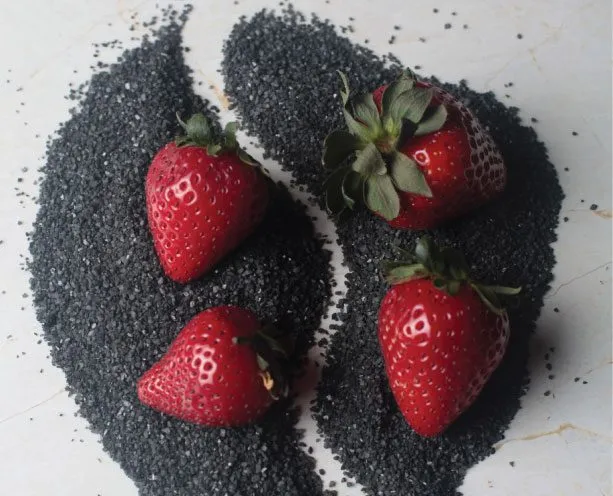
In this evocative piece titled Fruit of the Womb, the photographer explores the intersection of food and conceptual art. Seeking to push the boundaries of traditional food styling, the photographer utilized black sand as a textured canvas, meticulously drawing a yin and yang symbol to introduce a sense of balance and philosophical depth. The composition relies on precise studio lighting to highlight the contrast between the organic subject and the stark, dark medium. This image stands out for its creative ambition, demonstrating how a simple prop can be transformed into a compelling visual narrative that elevates food photography into the realm of fine art.
Iris Bachman
Born in Rochester, New York—the historic home of Eastman Kodak—Iris Bachman is a self-taught photographer with a deep-seated passion for capturing beauty across the globe. Her diverse portfolio spans hospitality, editorial, travel, and food photography, often defined by a documentary-style approach and a love for unique portraiture. Driven by a desire to document the momentous and the timeless, she frequently embarks on soul-boosting road trips to refine her craft, ensuring her work remains as adventurous and enriching as the travels that inspire it.
Resonance Score Breakdown
Transparency Note: The resonance score (13.6/20) is calculated based on social engagement metrics collected before the award announcement.
Expert Photography Reviews · 8
The Weight of Origin
Can we ever truly separate the nourishment we consume from the soil that birthed it? We often treat our sustenance as a mere transaction, a fleeting necessity to bridge the gap between hunger and satiety.
Read the reflection →The Weight of the Seed
In the quiet corners of a kitchen, we often forget that every meal begins with a surrender. A seed must break its own shell to become something else, a process that is both violent and necessary.
Read the reflection →Reviews & Comments
Share your thoughts about this award-winning photograph. Your reviews contribute to the community engagement score.
The obsidian grit, reminiscent of a Morandi still life drained of its warmth, anchors the composition in a void that feels almost primordial. It’s the interplay between the stark, volcanic black and the organic, fleshy ochre of the fruit that truly haunts me; I’m breathless at how the light catches those bruised, bruised-plum shadows. One finds a quiet, unsettling equilibrium here, where the palette doesn’t merely decorate, but aches with a profound, silent, chromatic gravity.
The grain of that black sand hits like a slow-motion tracking shot. It’s heavy, tactile, almost cinematic in its stillness. I love how the yin and yang symbol grounds the frame; it’s a perfect edit, a visual rhythm that doesn’t need a cut. Bachman understands the weight of the pause here. It’s a quiet, deliberate sequence captured in a single shutter click. I’d keep this frame in the final cut every single time.
Black sand isn’t merely a canvas; it’s a void that swallows the fruit’s vanity. Bachman forces us to confront the tension between organic decay and the absolute stillness of the dark. I’ve stared at this yin and yang for an hour, and it’s unsettling how the light clings to the skin of the produce, desperate to escape the abyss. It doesn’t invite us to eat. It demands we acknowledge that everything eventually returns to the shadow.
Black sand. A curve of fruit. It’s a quiet tension. I find myself holding my breath, waiting for the grains to shift. The yin and yang aren’t just shapes here; they’re a weight. I’ve seen enough cluttered plates to last a lifetime. This is different. It’s a deliberate exhale. Nothing here is accidental. The empty corner isn’t empty. It’s the space where the silence lives. I’m grateful for the restraint. It’s rare.
At f/7.1, the focal plane is razor-thin, yet the Canon 5D Mark II resolves the granular silica of the black sand with startling clarity. I’m genuinely moved by how the light catches those jagged edges, creating a micro-contrast that feels almost tactile. It’s a brilliant use of the 50mm lens’s inherent sharpness. The diffraction of light across that dark, textured surface is, in the strictest physical sense, extraordinary. It’s a beautiful, precise study of balance.
Black sand and a yin-yang symbol. It’s a tidy studio exercise, isn’t it? One suspects the photographer spent more time arranging the grains than contemplating the subject. It’s technically proficient, sure, but I’m left cold. I’ve spent weeks shivering in the Highlands for a single frame, and frankly, this feels like a weekend project. It’s clever, but it hasn’t cost the artist a thing. Where’s the grit? Where’s the sacrifice? It’s just too comfortable.
Most food photography is ephemeral, destined for a trash bin. Of the thousands I’ve reviewed, this one lingers because it refuses to be just a recipe illustration. The black sand isn’t merely a prop; it’s a void that forces the fruit to exist in a vacuum. I’ll admit, the yin-yang symbol felt risky, but it works. It’s a rare piece that treats sustenance as a philosophical weight. Thirty years from now, it’ll still feel heavy.
Before the eye identifies the fruit, something in the chest tightens. The black sand creates a sensory friction that makes my own skin feel coarse, almost parched. It’s a quiet, heavy activation. I’ve returned to this piece three times today, and each time, the yin-yang symmetry feels less like a philosophical choice and more like a desperate attempt to contain a messy, organic grief. It’s haunting how the stillness here makes my pulse quicken.