Lily by Roberto Pagani
While searching for lost car keys along a trail near Premana, overlooking Lake Lecco, the photographer stumbled upon a wild lily boasting extraordinary colors. Captivated by the flower's vibrant beauty, the photographer set aside the search to spend ten minutes experimenting with various angles and lighting, including the use of a flash. This image is award-worthy for its spontaneous discovery and the meticulous attention given to a fleeting moment in nature, transforming a simple roadside encounter into a striking, intimate macro study of botanical detail.
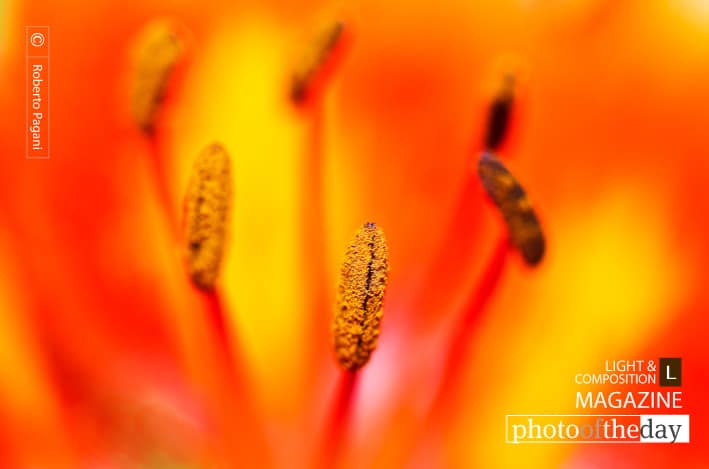
Roberto Pagani
Based in Monza, Italy, Roberto Pagani is a dedicated self-taught photographer whose journey began in 1978. After mastering film photography with Yashica and Contax systems, he transitioned to digital in 2006, currently utilizing Canon equipment to explore his passion for nature, street, macro, and travel photography. His evocative work has earned recognition through various web features and magazine publications, reflecting a lifelong commitment to capturing the world through his lens.
Resonance Score Breakdown
Transparency Note: The resonance score (13.3/20) is calculated based on social engagement metrics collected before the award announcement.
Expert Photography Reviews · 6
The Architecture of Silence
We spend so much of our lives looking for what is lost—the keys to a house, the thread of a conversation, the misplaced certainty of who we are. We walk with our heads bowed, scanning the dust, convinced that the value of our day lies in the recovery of what has vanished.
Read the reflection →Velvet Held in Breath
The air near the water always tastes of damp stone and the slow, sweet rot of fallen leaves. I remember pressing my face into the cool, waxy skin of a petal when I was small, the surface yielding like silk against my cheek.
Read the reflection →Reviews & Comments
Share your thoughts about this award-winning photograph. Your reviews contribute to the community engagement score.
Most macro shots of lilies are clinical, sterile things I’ve seen a thousand times. What separates this from the pack is the way Pagani let the flash bite into the petals, turning a roadside weed into something sculptural and aggressive. It’s not just pretty; it’s got a pulse. I’ll admit, the sharp contrast makes me lean in close every time I see it. It’s a rare, honest study that’ll still feel vital in thirty years.
Ten minutes spent hunting for car keys, then ten more on a lily. It’s a charming enough encounter, I suppose, but one wonders what might have emerged had he returned at dawn for a week instead of rushing the process. The flash work is competent, yet it lacks the quiet gravity of a subject truly known. I’ve spent longer waiting for a single cloud to shift. It’s pretty, but it hasn’t been earned.
The search for lost keys fell away, replaced by a sudden, quiet communion. I’ve felt that shift—the moment the world stops demanding and starts revealing. He stood there, letting the flash soften the shadows of the lily against the vast, indifferent breath of Lake Lecco. It’s a fragile, intimate grace. Looking at these petals, I feel a strange, sharp ache for the stillness he found. He didn’t just see the flower; he listened to it.
Most photographers fear the void, but Pagani invites it to feast upon the lily. By forcing the flash against the encroaching gloom of Lake Lecco, he strips the flower of its botanical innocence. It’s a violent, beautiful isolation. I’ve spent hours staring into these petals, and I’m unsettled by how the darkness doesn’t just frame the subject—it consumes it. It’s not a study of nature; it’s a meditation on what we lose when we insist on being seen.
The petals bleed into a bruised, sunset violet, reminiscent of a Morandi still life, yet it’s that sudden, electric jolt of pollen-gold that truly arrests the senses. I’ve found myself breathless before this chromatic tension, where the cool, damp shadows of Lake Lecco’s periphery collide with such fervent, botanical heat. It’s a fleeting, visceral dialogue of light, and honestly, it’s the most exquisite, quiet rebellion against the mundane I’ve encountered in years.
The frame’s geometry hinges on the lily’s central axis, creating a rigid verticality that anchors the chaotic botanical sprawl. It’s a disciplined study in spatial tension. The shallow depth of field isolates the petals, forcing the eye to navigate the sharp transition between focus and blur. I’m genuinely unsettled by how the flash flattens the background, yet the composition holds. It doesn’t rely on sentiment. The structure is absolute. It’s a rare, cold precision.