Rocks at the Gate by Joe Azure
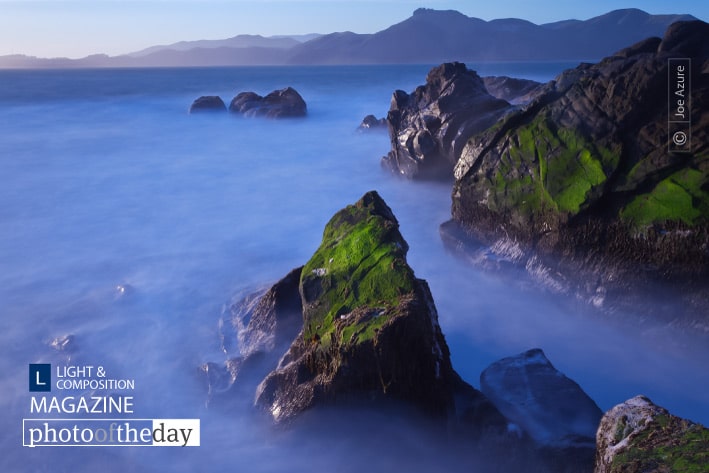
Captured at the southern entrance of the Golden Gate, this long-exposure photograph highlights the dramatic interplay between the relentless Pacific Ocean and the rugged coastline. By utilizing a 25-second exposure, the photographer transformed the crashing surf into a silky, ethereal veil that contrasts sharply with the jagged, eroded textures of the ancient rocks. This deliberate technical choice emphasizes the raw, weathered beauty of the shoreline, turning a familiar landmark into a sculptural study of natural decay. The image stands out for its masterful balance of motion and stillness, capturing the quiet resilience of the landscape against the constant, rhythmic power of the tide.
Joe Azure
Originally from the seaside town of Sitka, Alaska, Joe Azure now resides in the vibrant urban landscape of San Francisco, California. His work is deeply influenced by the contrast between his rugged coastal upbringing and the man-made structures of his current home, often focusing on the intersection of urban decay and the natural world. By documenting how the sea reclaims coastal constructions, Azure creates compelling landscape narratives that highlight the beauty of transition and the enduring power of the environment.
Resonance Score Breakdown
Transparency Note: The resonance score (13.5/20) is calculated based on social engagement metrics collected before the award announcement.
Expert Photography Reviews · 4
The Salt on My Skin
The smell of the ocean is never just water; it is the scent of cold, wet stone and the sharp, metallic tang of salt drying on skin. I remember sitting on a jagged ledge as a child, the grit of sand pressing into my palms, feeling the vibration of the tide deep in my marrow.
Read the reflection →The Patience of Stone
In the study of geology, we are taught that time is not a line, but a weight. We speak of eras as if they were layers of sediment, pressed down by the sheer gravity of existence.
Read the reflection →Reviews & Comments
Share your thoughts about this award-winning photograph. Your reviews contribute to the community engagement score.
What an amazing shot! Love.
The palette here evokes a Morandi-esque melancholy, where the slate-grey of the jagged stone meets the ethereal, ghost-white foam of the Pacific. It’s a haunting, monochromatic dance of light that I find utterly transfixing. One feels the cold, salt-heavy air clinging to the lens, a tactile chill that lingers long after the gaze shifts. It’s not merely a landscape; it’s a symphony of muted tones, whispering of ancient, weathered endurance against the relentless, shifting tides.
Twenty-five seconds of exposure at the Gate suggests a photographer who didn’t mind the salt spray ruining their gear. It’s a cold, damp business, standing on those rocks while the Pacific tries to reclaim your tripod. I’ve spent enough mornings shivering in similar spots to appreciate the commitment here. The water’s texture is smooth, but the rocks remain properly jagged. One suspects Azure returned until the tide finally agreed to cooperate. It’s a decent bit of work.
The Pacific doesn’t rush for anyone, and Joe understood that. He stood here in the cooling hour, letting the shutter stay open for twenty-five seconds while the tide softened into a ghost-white veil. It’s a quiet, meditative surrender. I’ve spent enough dawns waiting for the rocks to reveal their secrets to know he didn’t just capture a scene; he listened to the water’s rhythm. It makes me want to breathe in that salt air again.
Twenty-five seconds of exposure doesn’t just blur the tide; it erases the ocean’s violence, leaving only a ghost of movement. I find the silence here unsettling, almost mournful. The jagged rocks aren’t merely geological features; they are anchors in a void, resisting the ethereal veil that threatens to dissolve them. It’s a cold, calculated purgatory. When I look at these shadows, I don’t see nature. I see the heavy, suffocating weight of time refusing to pass.