Fallen Angels by Ashik Masud
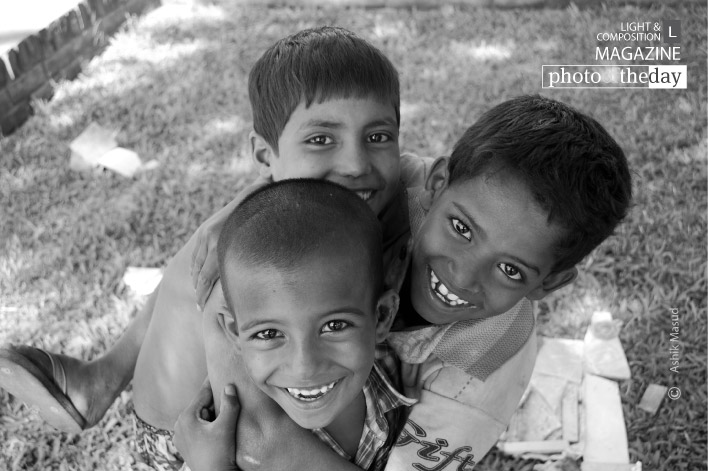
Captured at Rayer Bazaar Boddhovumi, this poignant portrait highlights the resilience and innocence of children living in poverty. The photographer was struck by the children's charm and their immediate, joyful reaction to the presence of a camera. By framing these subjects as "fallen angels," the image transcends its documentary roots to offer a heartfelt commentary on the beauty found in unexpected places. The photograph is award-worthy for its ability to capture a genuine, unposed connection between the subject and the lens, transforming a simple encounter into a powerful narrative of human spirit.
Vijaya Sri Sanjevi
Vijaya Sri Sanjevi graduated in Bachelor of International Business, who started photography as her hobby since January 2010, using the modest D40X Nikon with a standard 18-55mm lens. She is a self-taught photographer and believes the best way to learn is to just do it. [caption id="" align="alignnone" width="145"] Vijaya Sri Sanjevi[/caption] Camera Gear: Nikon D40X Lenses: Nikor 18-105mm Current Location: Kuala Lumpur, Malaysia Flickr: http://www.flickr.com/photos/vijayasri Twitter: http://twitter.
Resonance Score Breakdown
Transparency Note: The resonance score (12.7/20) is calculated based on social engagement metrics collected before the award announcement.
Expert Photography Reviews · 4
Dust and Haloes
We often mistake fragility for weakness, forgetting that the most resilient things in nature are those that have learned to bloom in the cracks of the pavement.
Read the reflection →The Grit of Unspoken Grace
The smell of rain on hot, dry earth always brings me back to the feeling of bare feet on sun-baked clay. It is a rough, grounding sensation—the way the dust clings to the skin, a fine, powdery reminder that we are made of the ground we walk upon.
Read the reflection →Reviews & Comments
Share your thoughts about this award-winning photograph. Your reviews contribute to the community engagement score.
The frame’s geometry is precarious. The subjects’ placement creates a jagged, uneven weight that threatens to collapse the picture plane. It’s a chaotic arrangement, yet the 28mm lens forces a necessary proximity. I’m unsettled by the lack of vertical discipline here. The negative space doesn’t breathe; it suffocates the subjects. While the tension holds, it’s a fragile equilibrium. It doesn’t quite resolve, but the structural instability is precisely what makes it impossible to ignore.
Before the eye identifies the children, something in the chest tightens. It’s the sudden, sharp activation of empathy. Their gaze doesn’t ask for pity; it demands a recognition of presence. I’ve returned to these faces for years, and that initial, joyful spark still catches me off guard, pulling my breath shallow. It’s a haunting, beautiful friction. When I look away, the weight of their resilience follows me, lingering in the quiet spaces of my own day.
It’s easy to snap a quick portrait when the subjects are eager to perform. One suspects Masud didn’t linger long enough to see the novelty wear off. The composition is tidy, yet it lacks the grit of a scene truly inhabited. I’ve spent enough days shivering in the mud to know when a photographer has merely dropped by. It’s a pleasant enough snapshot, but I’m left wondering if he ever bothered to return.
Most portraits of poverty lean on sentimentality, but this one avoids that trap. The 28mm focal length forces an intimacy that makes me feel like I’m standing right there in the dust of Rayer Bazar. It’s the raw, unscripted defiance in their eyes that secures its legacy. I’ve seen thousands of shots of children, yet this one lingers because it doesn’t ask for pity; it demands recognition. It’s a rare, honest piece of history that’ll still matter decades from now.